
New development of aluminum alloy die-casting technology
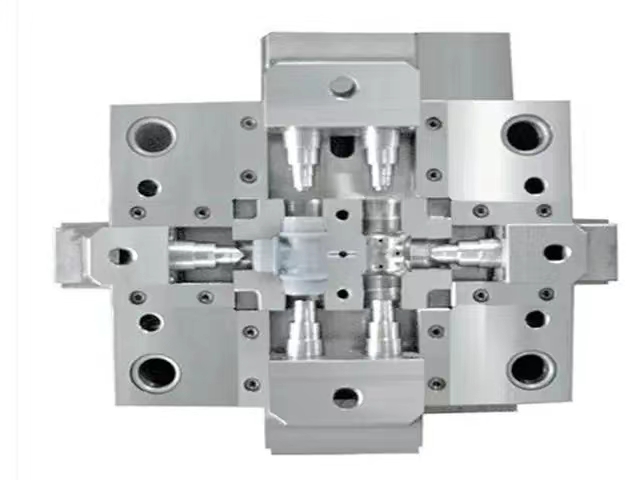
Pressure casting is a manufacturing process where molten metal is poured into a mould cavity under high pressure. This results in a dense and intricate casting with fine details and excellent surface finish. Pressure casting is widely used in industries where high precision and quality standards are required, such as automotive, aerospace, and consumer electronics.
New development of aluminum alloy die-casting technology
In recent years, people in order to solve the problem of pores and shrinkage inside die casting, make it can produce high strength, high density, welding, heat treatment, can twist various performance of die casting, continue to perfect the vacuum die casting and developed extrusion casting and semi-solid die casting, and generally called "high density die casting method".
- Vacuum die-casting technology Vacuum die casting method is to remove or partially empty the gas in the cavity to reduce the pressure in the cavity, so as to facilitate and eliminate the filling of the gas in the alloy melt, make the alloy melt fill the cavity under pressure, and solidify under pressure to obtain a compact die casting. Vacuum die casting requires special equipment- -vacuum die casting machine. The vacuum system of the vacuum die-casting machine can be roughly divided into two categories: One is the vacuum die casting in the die chamber in the vacuum hood; vacuum die casting is not an absolute vacuum die casting. Usually vacuum and die casting pressure in 50.7 kpa to 16 kpa, too low vacuum can not reach the vacuum die casting effect, too high vacuum is certainly better, but this makes the die casting speed reduced. The sealing of the vacuum system is important. If the connection between the pressure chamber and the casting and the pressure chamber and the pressure piston leaks, the die casting speed will be reduced, the vacuum effect will be weakened, and even waste. Vacuum die casting device will increase the complexity of the equipment and thus increase the production cost, but the body can be compensated by the advantages of vacuum die casting. The most attractive advantage of vacuum die-casting is that it greatly improves the surface finish and reduces the cost of finishing treatment. Moreover, the vacuum process makes the type cavity be filled better, which makes the thinner section can also be cast, thus expanding the application range of die-casting. The third advantage is that the mechanical performance of the vacuum die casting is improved, which is crucial for the long-term used parts. The reason is that the vacuum conditions improve the density of the casting, and the reduction of pores is one of the important characteristics of vacuum die casting. This has obvious advantages for castings with difficult exhaust and for large cavities with locally concentrated bubbles due to metal flow.
- Oxygenation and die-casting technology Oxygenation die casting is to replace the air with oxygen filling chamber and type cavity before the aluminum alloy liquid filling cavity. When filling, the oxygen is discharged through the exhaust tank, on the one hand; on the other hand, the sprayed aluminum liquid and the undischarged oxygen produce alumina particles, dispersed in the die casting, so that no air pores are produced in the die casting. Features of oxygenation die casting: eliminate or reduce pores, improve the quality of the casting. The mechanical strength is increased by 10%, and the elongation rate is 1.5~2 times. Because there is no air hole in the die casting, the strength can be further improved by heat treatment, increasing the yield limit, and significantly improving the impact performance; the die casting can work in 290~300e; compared with the vacuum die casting, simple structure, convenient operation and less investment. There are two methods of oxygen addition, namely, oxygenation by the pressure chamber and by the special device set on the die casting die. General vertical die casting machine is used from the reverse material punch into oxygen, and horizontal die casting machine is used in the die casting mold set oxygenation hole oxygen. Two main process factors: oxygenation time and oxygenation pressure should be strictly controlled in oxygenation die casting. In addition, we must reasonably design the pouring system and exhaust system, the correct choice of pressure shot speed, choose non-volatile paint, to ensure the quality of die casting. Oxygenation die casting can be used in die casting at high strength, high density and high temperature parts, is a promising die casting process method.
- Semi-solid-state die-casting technology Semi-solid die casting is a technique of stirring when liquid metal is solidified, obtaining about 50% of the solid phase component or higher at a certain cooling rate, and then forming the slurry through die casting. At present, there are two processes of semi-solid die casting: rheological forming process and touch forming process. The former is to send liquid metal to a specially designed pressure projection forming cylinder, shear by the spiral device to cool it into a semi-solid slurry, and then die casting. The latter is to send solid metal particles or debris to a screw compression forming machine, semi-solid metal particles through die casting under heating and shear conditions. Semi-solid die casting has the following advantages over all-liquid metal die casting:
- Because the semi-solid metal has 50% melting latent heat dispersion, so the pouring temperature is reduced, and the thermal impact on the pressure chamber, die casting chamber and die casting machine is greatly reduced, so the service life of the die casting mold can be improved.
- The viscosity of semi-solid metal is larger than that of liquid metal, and the flow rate at the inner gate is low, therefore; and the shrinkage of semi-solid metal is small, the casting is not easy to appear loose and the casting is of high quality.
- Semi-solid metal is transported to the pressing chamber like a soft solid, easy to operate. The emergence of semi-solid die casting points out a new way to solve the problem of low life of black metal die, and has a certain role in improving the quality of casting and improving the working conditions of pressure casting system of die casting machine.
- Extrusion and die-casting technology Extruded die-casting is also known as "liquid metal molding". The casting has good tightness, high mechanical properties, and no pouring outlet. Some enterprises in China have applied it in the actual production. Extrusion die casting technology has excellent technological advantages, it can not only replace the traditional die casting, extrusion casting, low pressure casting, vacuum die casting process, but also for differential pressure casting, continuous casting and forging, semi-solid rheological casting process compatible. Experts believe that extrusion die casting technology is a cutting-edge new technology, spanning a number of process fields, rich connotation, strong innovation, very challenging.
5. Low-pressure casting technology of electromagnetic pump Electromagnetic pump low pressure casting is a new rising low pressure casting process, compared with the gas low pressure casting technology, the pressure mode is completely different. The use of non-contact electromagnetic force directly acts on the liquid metal, greatly reduces the compressed air impurity and high partial pressure caused by oxidation and suction problems, to achieve the smooth transmission and filling of aluminum liquid, can prevent the secondary pollution caused by turbulence. In addition, the electromagnetic pump system is completely controlled by computer digital elements, the process execution is very accurate, good repetition, so that this process has obvious advantages in the yield, mechanical properties, surface quality and metal utilization rate. With the deepening of the research, the process is becoming more and more mature.
Some knowledge about die-casting
Refining treatment of die-cast aluminum alloy metal liquid
Related Article


