
Analysis of die casting under automobile aluminum alloy
author: kevin
2024-05-19
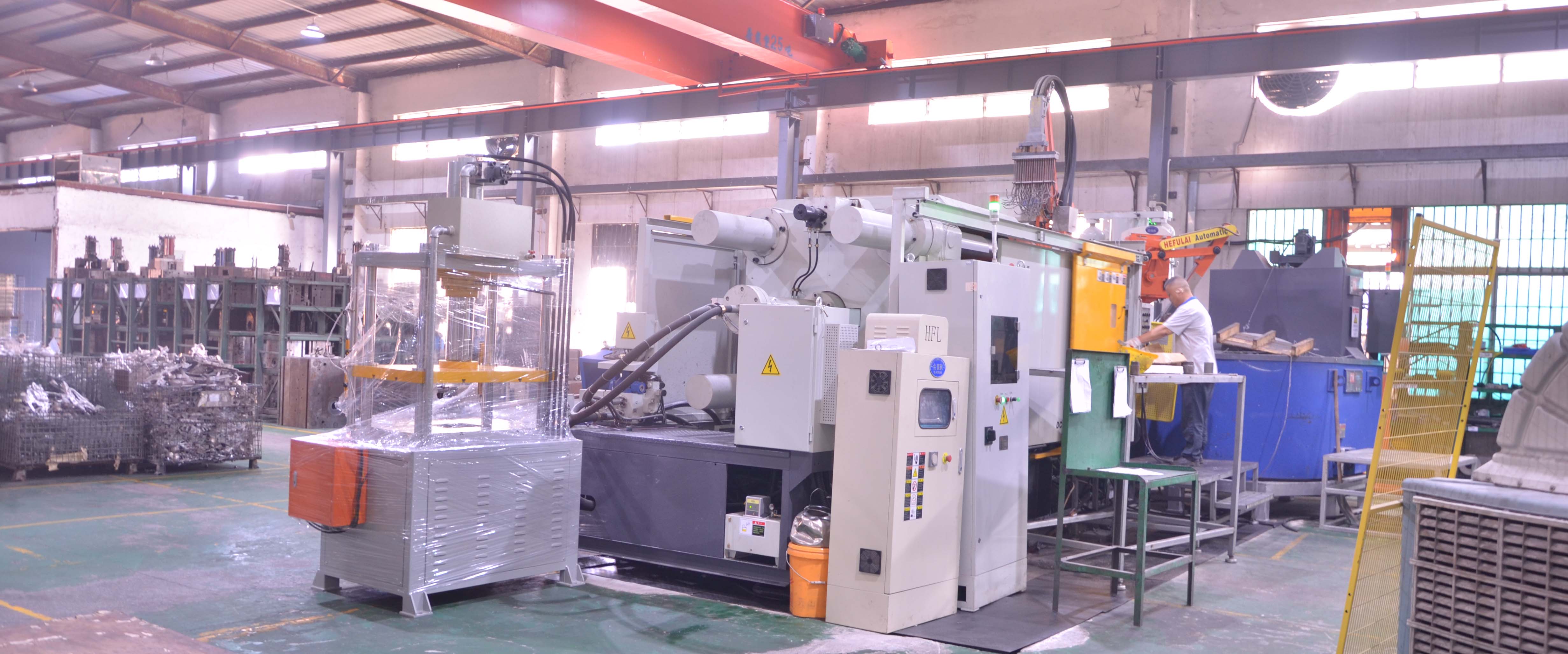
Analysis of die casting under automobile aluminum alloy
In recent years, energy saving and emission reduction has become the trend of The Times, and automobile lightweight is also the trend of The Times. Under these two backgrounds, the use of aluminum alloy materials is more and more extensive in automobiles, and more and more auto parts are formed with the help of die-casting. As the core component of a car, the engine cylinder is mostly made of aluminum alloy and cast iron, among which the die-cast aluminum alloy cylinder has been more and more recognized, Japan, South Korea and Europe and the United States mostly use die-cast aluminum alloy cylinder.
In the field of cylinder production, ordinary sand cast iron cylinder has the advantages of simple process, low cost, rigidity and good heat resistance, but also has a disadvantage, that is too much weight. If the crankshaft below the cylinder block and the cylinder liner above are divided into two, the use of aluminum alloy and the use of cast iron above, can kill two birds with one stone, not only reduce the quality of the cylinder block, but also can maintain the advantages of cast iron cylinder block.
Lower cylinder block refers to the crankshaft part of the lower part of the engine after such two parts. Because the lower cylinder block is thick wall parts, and the wall thickness difference is large, so the difficulty of die casting is very difficult. Drawing on the relevant experience at home and abroad, we designed and developed a set of lower cylinder block die-casting technology for a type of 1.5T engine, and the test was very successful.
1 aluminum alloy lower cylinder block die-casting difficulties The mass of the aluminum alloy lower cylinder cast is 8.4kg, the contour size is 382mm 258mm 67mm, the die cast mass is 11.1kg, the material is A380, and the average wall thickness is 7.2mm. Because the lower cylinder block is connected to the crankshaft, the cast iron insert also needs to be placed at the bottom.
The die casting process of lower cylinder casting is complex, and the difficulties are as follows: First, the casting parts need to be placed in 5 cast iron inlay parts, and the cast iron inlay parts should be perfectly inlaid on the aluminum alloy casting parts, and the phenomenon of separation can not occur.
Second, the thinnest wall thickness of the lower cylinder block cast is 2mm, and the thickest wall thickness is 24mm, and the distribution is seriously uneven.
Third, due to the large difference in the wall thickness on both sides of the inlay, it brings a great difficulty to the flow filling type of aluminum alloy liquid, and also tests its replenishment and contraction ability.
Fourth, aluminum alloy castings are prone to pores, shrinkage, cracks, shrinkage and other defects, quality control is difficult.
2 According to the test analysis, we believe that the main technical points of the lower cylinder block are as follows: First, the pouring system of the die casting of the cylinder block is scientifically designed. The insert in the middle of the lower cylinder block is thin wall, and the upper and lower parts are thick, so we choose unilateral pouring. In this way, the aluminum liquid can be fed from the bottom side and flow through the middle insert to the top.
Second, we use vacuum die-casting of the exhaust block. The combination of the exhaust block and the vacuum machine can improve the insufficient liquidity caused by the thin walls on both sides and ensure the good quality of the casting.
Third, in order to improve the wetting degree of aluminum alloy liquid and cast iron inlay, we are preheating the inlay, which not only ensures that the cast iron and aluminum alloy do not separate after forming, but also improves the fluidity of aluminum liquid.
After the test, the internal tissue of the lower cylinder block is dense, and the appearance is well formed. In the process of die-casting of the lower cylinder block, the scientific and reasonable process parameters are the guarantee of obtaining the high quality of the lower cylinder block. We believe that the following process parameters are the key influencing factors for casting forming:
First, the die-casting temperature. In the process of die-casting, the aluminum liquid temperature should be well controlled, because the temperature is too high or too low can not achieve good casting effect, too high is easy to lead to shrinkage and shrinkage, too low is easy to lead to poor filling type. Generally speaking, the reasonable temperature of aluminum liquid should be between 650 —— 665℃, while the temperature after mold coating should be between 150 —— 200℃.
Second, the inlay piece temperature. When the inlay reaches 120 —— 140℃, the aluminum liquid overflow tank side on the side, which improves the internal quality. Third, die-casting fast, slow pressure shooting speed and pressure. The fast pressure emission and the slow pressure emission velocity should be controlled at about 4 m/s and about 0.22 m/s, respectively, and the pressure should be controlled at about 70MPa.
Fourth, aluminum liquid quality. As the basic material of casting, the quality of aluminum liquid determines the quality of casting, so to ensure the quality of aluminum alloy liquid, each package of aluminum liquid must be refined and removed to avoid pollution.
3 Aluminum alloy lower cylinder block die-casting defects and response After the casting was formed, we conducted X-ray inspection on the casting and found some internal defects, such as shrinkage, aperture, shrinkage and so on. In order to improve the defects and improve the quality, we put forward the corresponding countermeasures, and the main directions are as follows:
First, improve the overflow groove structure. The overflow tank has the functions of gas in the excluded cavity, storage gas, transfer hole / release part. After repeated tests and studies, we found that we can use extension and additional overflow tank and other means to improve the defects such as shrinkage hole and stoma. Because there are many loosening phenomena in the middle of the casting, if the overflow port is set on a large plane, the filling pressure will be affected, so the vertical overflow port is usually selected.
Second, optimize the mold cooling system. Casting shrinkage hole will generally appear in the local temperature is too high or too thick wall position. Through the study, we found that the temperature of the two walls is high, which is easy to cause the shrinkage hole. Since the minimum diameter of cold pipe is 12mm, it cannot effectively cool the above position, so we have improved the cooling water pipe structure, using high pressure cooling equipment and stainless steel point cold pipe with inner diameter of 4mm. We cooled the mold core in the middle of both sides of the casting to about 180℃, which greatly reduced the phenomenon of shrinkage hole and greatly improved the quality of the casting.
Third, improve the phenomenon of mosaic separation. In view of the separation phenomenon between the inlay and aluminum alloy casting, we adopted the following measures: first, use the diluent to clean the inlay to improve the wettability; second, implement the positioning hole inspection and appearance inspection for the inlay, remove the rust spot with steel wire; third, conduct the preheating test for the inlay, when the temperature of more than 120℃, the separation of the inlay can be effectively solved.
Advantages of aluminum alloy die casting as mobile phone parts
Maintenance and maintenance of aluminum alloy die casting processing mold
Related Article

CNC lathe, full name Computer Numerical Control (CNC), is a highly automated machine tool equipment, mainly used for metal cutting.
what is a cnc machine

Custom CNC (Computer Numerical Control) machining is a manufacturing process that utilizes computer-controlled tools to precisely shape and form intricate parts and components for a wide variety of industries.
Finding the Best Custom CNC Machining Near Me: Tips and Tricks for High-Quality Parts

Aluminum pressure die casting is a manufacturing process that is commonly used in the production of complex metal parts used in a variety of industries, including aerospace, automotive, and electronics. The process involves injecting molten aluminum alloy into a high-pressure steel die in order to create parts with excellent surface finish and dimensional accuracy.
Exploring the Benefits and Advantages of Aluminum Pressure Die Casting for Industrial Applications

Die cast caterpillar models are highly detailed miniature replicas of the real-life heavy machinery used in construction, mining and agriculture. They are made using precision metal molds that create a highly detailed and realistic version of the equipment. Due to their detailed design and high quality construction, these models are highly valued by collectors and enthusiasts alike.
Exquisite Die Cast Caterpillar - Imported Model