
What are the advantages and disadvantages of die casting?
author: Duddley
2024-04-25
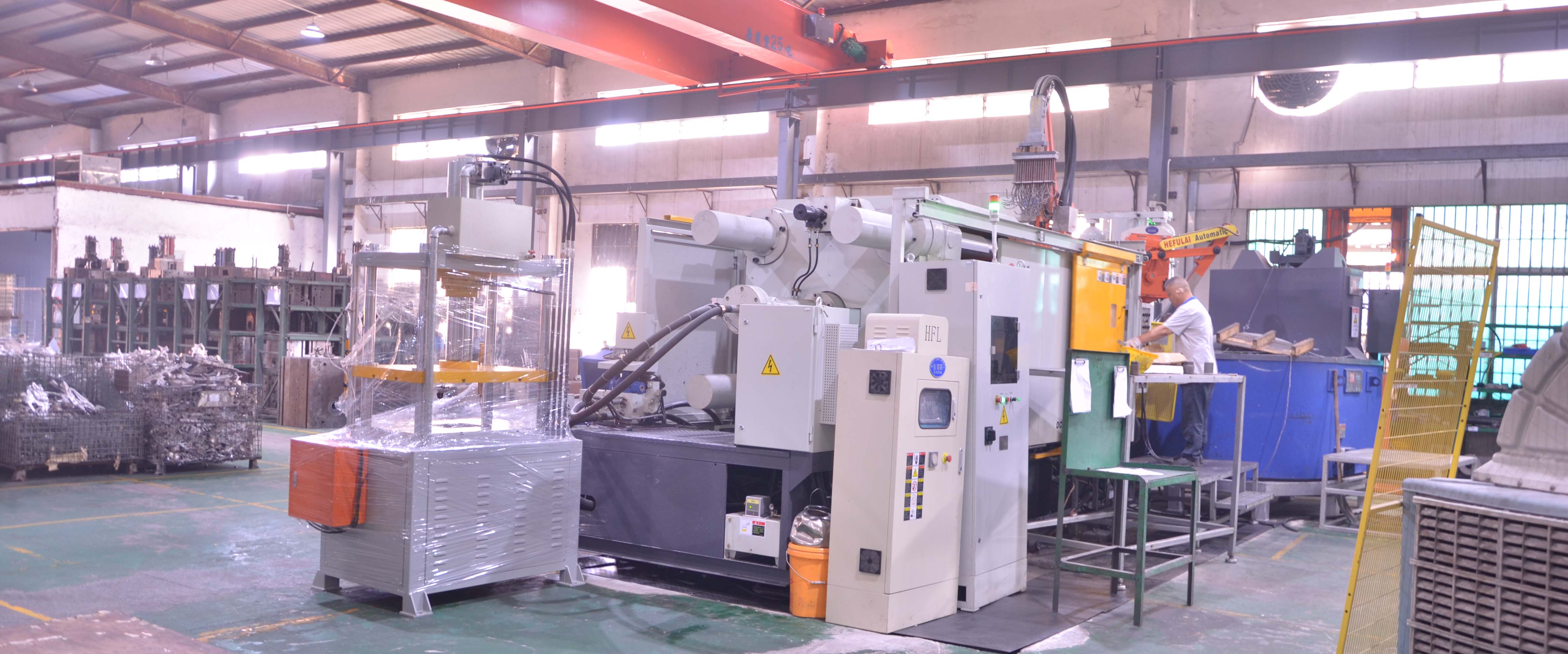
Die casting, as a metal forming process, has advantages such as high production efficiency, good surface quality, complex shape production capability, and material utilization. However, there are also disadvantages, such as high tooling costs, limited materials and thickness, and the need for skilled operators. Die casting is widely used in automotive, aerospace, and electronics industries.

Advantage
The advantages of die casting include excellent dimensional accuracy of the castings. Usually, this depends on the casting material, and the typical value is an error of 0.1 millimeters at the initial 2.5 centimeters size, with an increase of 0.002 millimeters for every 1 centimeter increase in error. Compared to other casting processes, its casting surface is smooth and the fillet radius is approximately 1-2.5 microns. Compared to sandbox or permanent mold casting methods, castings with a wall thickness of approximately 0.75 millimeters can be manufactured. It can directly cast internal structures, such as wire sleeves, heating elements, and high-strength load-bearing surfaces. Other advantages include its ability to reduce or avoid secondary mechanical processing, fast production speed, casting tensile strength up to 415 megapascals, and the ability to cast high fluidity metals.
Disadvantages
The biggest drawback of die casting is its high cost. Casting equipment, molds, and related components are relatively expensive compared to other casting methods. Therefore, it is more economical to produce large quantities of products when manufacturing die castings. Other drawbacks include that this process is only suitable for metals with high fluidity, and the casting quality must be between 30 grams and 10 kilograms [5]. In typical die casting, the final batch of castings will always have pores. Therefore, no heat treatment or welding can be carried out because the gas inside the gap will expand under the action of heat, resulting in internal micro defects and surface peeling.
The advantages of die casting include excellent dimensional accuracy of the castings. Usually, this depends on the casting material, and the typical value is an error of 0.1 millimeters at the initial 2.5 centimeters size, with an increase of 0.002 millimeters for every 1 centimeter increase in error. Compared to other casting processes, its casting surface is smooth and the fillet radius is approximately 1-2.5 microns. Compared to sandbox or permanent mold casting methods, castings with a wall thickness of approximately 0.75 millimeters can be manufactured. It can directly cast internal structures, such as wire sleeves, heating elements, and high-strength load-bearing surfaces. Other advantages include its ability to reduce or avoid secondary mechanical processing, fast production speed, casting tensile strength up to 415 megapascals, and the ability to cast high fluidity metals.
Disadvantages
The biggest drawback of die casting is its high cost. Casting equipment, molds, and related components are relatively expensive compared to other casting methods. Therefore, it is more economical to produce large quantities of products when manufacturing die castings. Other drawbacks include that this process is only suitable for metals with high fluidity, and the casting quality must be between 30 grams and 10 kilograms [5]. In typical die casting, the final batch of castings will always have pores. Therefore, no heat treatment or welding can be carried out because the gas inside the gap will expand under the action of heat, resulting in internal micro defects and surface peeling.
What design is a good design die casting part?
What is die casting tooling, die casting molds, die casting moulds?
Related Article

CNC lathe, full name Computer Numerical Control (CNC), is a highly automated machine tool equipment, mainly used for metal cutting.
what is a cnc machine

Custom CNC (Computer Numerical Control) machining is a manufacturing process that utilizes computer-controlled tools to precisely shape and form intricate parts and components for a wide variety of industries.
Finding the Best Custom CNC Machining Near Me: Tips and Tricks for High-Quality Parts

Aluminum pressure die casting is a manufacturing process that is commonly used in the production of complex metal parts used in a variety of industries, including aerospace, automotive, and electronics. The process involves injecting molten aluminum alloy into a high-pressure steel die in order to create parts with excellent surface finish and dimensional accuracy.
Exploring the Benefits and Advantages of Aluminum Pressure Die Casting for Industrial Applications

Die cast caterpillar models are highly detailed miniature replicas of the real-life heavy machinery used in construction, mining and agriculture. They are made using precision metal molds that create a highly detailed and realistic version of the equipment. Due to their detailed design and high quality construction, these models are highly valued by collectors and enthusiasts alike.
Exquisite Die Cast Caterpillar - Imported Model