
What design is a good design die casting part?
author: Duddley
2024-04-25
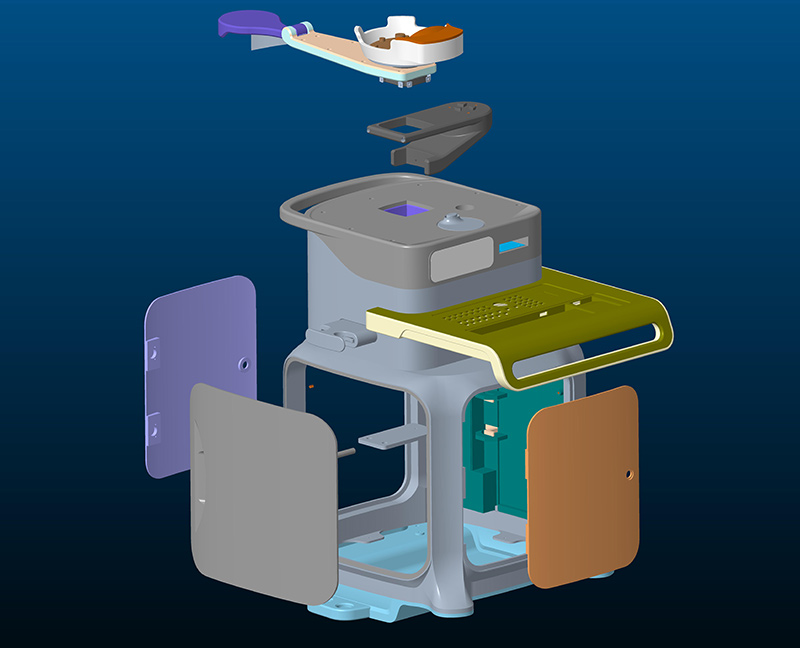
Casting part design is a crucial aspect of manufacturing. Proper design can ensure that the casting process results in dimensional accuracy, structural integrity, and aesthetic quality. Important considerations for casting part design include material selection, the use of ribs and fillets for added strength, and the placement of gates and runners for successful fill and venting. Proper casting design can lead to a successful and cost-efficient manufacturing process.

On the premise of meeting product functions, design die castings reasonably, simplify die casting mold structure, reduce die casting costs, reduce die casting defects, and improve the quality of die casting parts. Due to the fact that the injection molding process originates from the casting process, the design guidelines for die-casting are very similar to those for plastic parts in some aspects. The detailed design of die-casting parts refers to the book "Design Guidelines for Manufacturing and Assembly Products" published by the Machinery Industry Press.
fillet
The casting drawing (including corners) often indicates requirements such as unmarked rounded corners R2. When opening the mold, we must not ignore the role of these unmarked rounded corners and must not make them clear or too small. Casting rounded corners can ensure smooth filling of molten metal, sequential discharge of gas in the cavity, reduce stress concentration, and extend the service life of the mold. Castings are also less prone to cracks or various defects due to poor filling at this location. There are many corners on the standard oil pan mold, relatively speaking, the brother oil pan mold is currently the best, and there are also many heavy machine oil pans.
Demolding slope
It is strictly prohibited to have artificially caused side concavities in the demolding direction (often due to the casting sticking to the mold during trial molding, and local concavities caused by incorrect methods such as drilling, hard chiseling, etc.).
Roughness
The forming parts and pouring system should be carefully polished according to the requirements, and should be polished along the direction of demolding. Due to the fact that the entire process of metal liquid entering the pouring system from the pressure chamber and filling the mold cavity only takes 0.01-0.2 seconds. In order to reduce the resistance of metal liquid flow and minimize pressure loss, it is necessary to have a high surface smoothness when flowing through. Meanwhile, the heating and erosion conditions at the pouring system are harsh, and the poorer the smoothness, the more susceptible the mold is to damage.
5. The hardness of the formed part of the mold is about HRC46 ° for aluminum alloy and HRC38 ° for copper. When processing, the mold should have as much margin for repair as possible, and the upper limit of the size should be set to avoid welding.
fillet
The casting drawing (including corners) often indicates requirements such as unmarked rounded corners R2. When opening the mold, we must not ignore the role of these unmarked rounded corners and must not make them clear or too small. Casting rounded corners can ensure smooth filling of molten metal, sequential discharge of gas in the cavity, reduce stress concentration, and extend the service life of the mold. Castings are also less prone to cracks or various defects due to poor filling at this location. There are many corners on the standard oil pan mold, relatively speaking, the brother oil pan mold is currently the best, and there are also many heavy machine oil pans.
Demolding slope
It is strictly prohibited to have artificially caused side concavities in the demolding direction (often due to the casting sticking to the mold during trial molding, and local concavities caused by incorrect methods such as drilling, hard chiseling, etc.).
Roughness
The forming parts and pouring system should be carefully polished according to the requirements, and should be polished along the direction of demolding. Due to the fact that the entire process of metal liquid entering the pouring system from the pressure chamber and filling the mold cavity only takes 0.01-0.2 seconds. In order to reduce the resistance of metal liquid flow and minimize pressure loss, it is necessary to have a high surface smoothness when flowing through. Meanwhile, the heating and erosion conditions at the pouring system are harsh, and the poorer the smoothness, the more susceptible the mold is to damage.
5. The hardness of the formed part of the mold is about HRC46 ° for aluminum alloy and HRC38 ° for copper. When processing, the mold should have as much margin for repair as possible, and the upper limit of the size should be set to avoid welding.
Integrated die-casting is the future industry development trend
What are the advantages and disadvantages of die casting?
Related Article

CNC lathe, full name Computer Numerical Control (CNC), is a highly automated machine tool equipment, mainly used for metal cutting.
what is a cnc machine

Custom CNC (Computer Numerical Control) machining is a manufacturing process that utilizes computer-controlled tools to precisely shape and form intricate parts and components for a wide variety of industries.
Finding the Best Custom CNC Machining Near Me: Tips and Tricks for High-Quality Parts

Aluminum pressure die casting is a manufacturing process that is commonly used in the production of complex metal parts used in a variety of industries, including aerospace, automotive, and electronics. The process involves injecting molten aluminum alloy into a high-pressure steel die in order to create parts with excellent surface finish and dimensional accuracy.
Exploring the Benefits and Advantages of Aluminum Pressure Die Casting for Industrial Applications

Die cast caterpillar models are highly detailed miniature replicas of the real-life heavy machinery used in construction, mining and agriculture. They are made using precision metal molds that create a highly detailed and realistic version of the equipment. Due to their detailed design and high quality construction, these models are highly valued by collectors and enthusiasts alike.
Exquisite Die Cast Caterpillar - Imported Model