What is Magnesium Die Casting?
author: Duddley
2024-12-19

What is Magnesium Die Casting?
-The Alluring World of Magnesium Alloy Die Casting
I. The Rising Star in the Material Universe - Magnesium Alloys
In the vast expanse of materials science, magnesium alloys have emerged as a remarkable and highly sought-after class of substances. Composed primarily of magnesium, these alloys are often alloyed with elements such as aluminum, zinc, manganese, and rare earth metals to enhance their properties. Their most prominent characteristic is their astonishingly low density. Compared to traditional metals like steel and aluminum, magnesium alloys are significantly lighter, making them a dream come true for industries where weight reduction is of utmost importance. This lightness, however, does not come at the cost of strength. Through careful alloying and heat treatment processes, magnesium alloys can exhibit impressive mechanical strength, allowing them to withstand substantial loads and stresses.
Moreover, magnesium alloys possess excellent machinability, meaning they can be easily shaped and formed into intricate and complex geometries. Their good thermal conductivity is another feather in their cap, enabling efficient heat dissipation, which is crucial in applications such as electronics and automotive engines. Additionally, they offer reasonable corrosion resistance, especially when properly treated and coated, further expanding their range of potential uses.
II. Decoding the Die Casting Process
Die casting is a manufacturing method that has been refined over the years to produce high-quality, precision components with remarkable efficiency. At its core, the process involves injecting molten metal into a precisely machined die cavity under high pressure. When it comes to magnesium alloy die casting, the first step is to melt the alloy to the optimal temperature range, ensuring its fluidity is just right for the casting process.
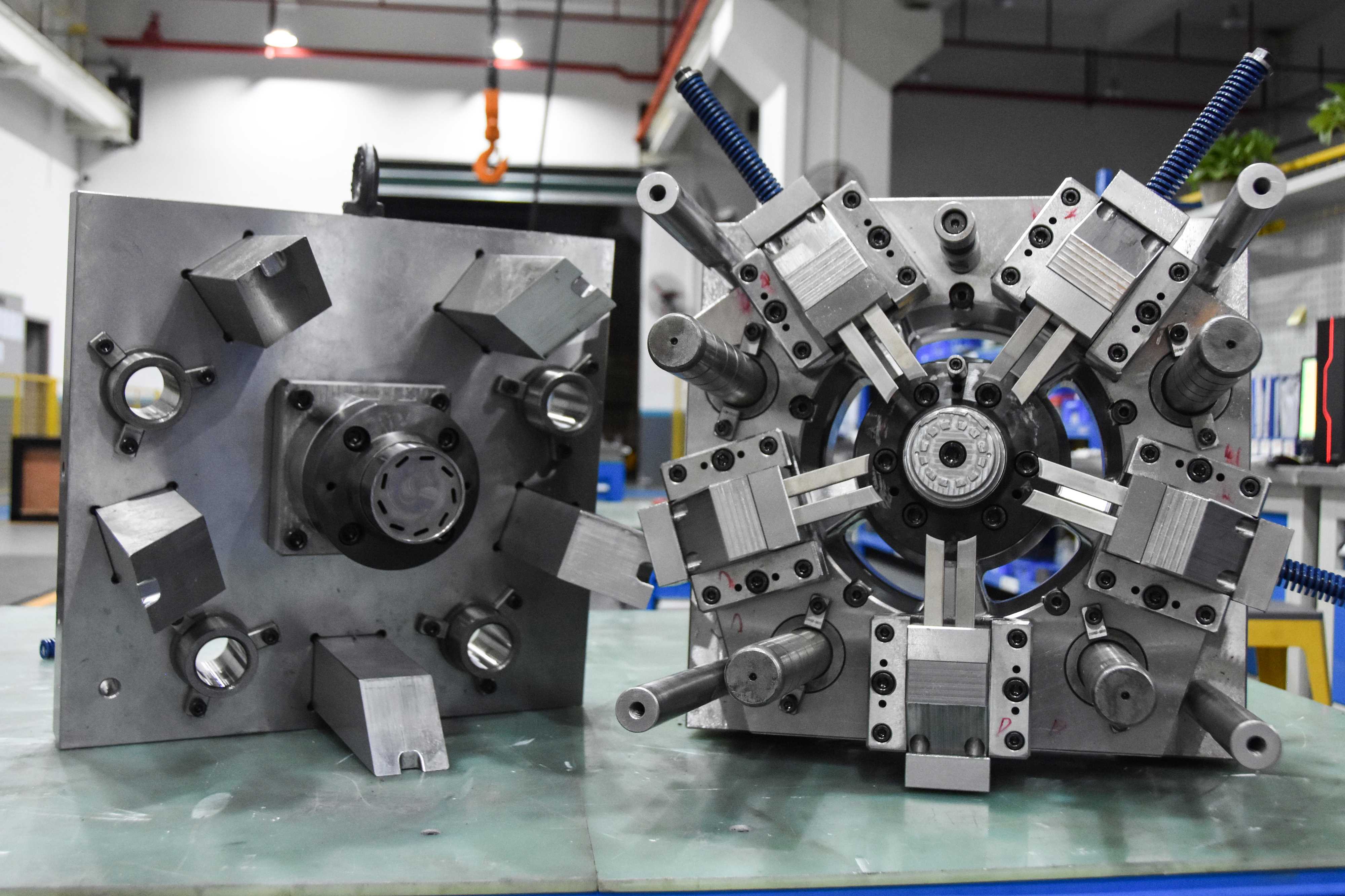
The molten magnesium alloy is then forced into the die cavity using a high-pressure injection system. The die, typically made of hardened steel, is designed with great precision to create the exact shape and dimensions of the desired part. The high pressure ensures that the alloy fills every nook and cranny of the cavity, replicating even the most intricate details with astonishing accuracy. This results in parts with excellent surface finish and tight dimensional tolerances, often requiring minimal post-processing.
Once the alloy has solidified inside the die, the die is opened, and the newly formed part is ejected. The entire process is highly automated and can be repeated rapidly, making it suitable for mass production. This combination of speed, precision, and repeatability is what makes die casting, especially with magnesium alloys, so appealing to manufacturers across various industries.
III. The Multitude of Advantages
A. Weight Reduction and Performance Enhancement
The lightweight nature of magnesium alloy die-cast parts is a game-changer in industries like automotive and aerospace. In the automotive sector, for example, using magnesium alloy components in the engine, transmission, and chassis can significantly reduce the overall weight of the vehicle. This reduction in weight translates directly into improved fuel efficiency, better acceleration, and handling. In aerospace, where every ounce matters, magnesium alloys allow for the construction of lighter aircraft structures, leading to reduced fuel consumption during flight and increased payload capacity.
B. Design Flexibility and Complexity
The die casting process enables the production of parts with highly complex shapes that would be difficult or impossible to achieve with other manufacturing methods. Intricate internal cavities, thin walls, and undercuts can all be easily incorporated into the design. This design flexibility allows engineers to optimize the functionality and performance of components, leading to more innovative and efficient products. For instance, in the design of electronic device housings, magnesium alloy die casting can create sleek, ergonomic shapes with integrated cooling channels and mounting features, all in a single manufacturing step.
C. Cost-Effectiveness in the Long Run
While the initial investment in die casting equipment and tooling may be significant, the high production rates and minimal post-processing requirements of magnesium alloy die casting make it cost-effective in large-scale production. The ability to produce parts with tight tolerances and excellent surface finish reduces the need for expensive machining and finishing operations. Additionally, the recyclability of magnesium alloys further lowers the overall cost of production, as scrap material can be easily remelted and reused without significant loss of properties.
IV. Pioneering Applications and Future Frontiers
Magnesium alloy die casting is already making a significant impact in a wide range of industries. In the automotive industry, it is being used for components such as steering wheels, seat frames, and engine blocks. In the electronics field, it finds application in laptop housings, mobile phone frames, and camera bodies, where its combination of light weight and good electromagnetic shielding properties is highly valued. In the medical sector, magnesium alloys are being explored for use in implantable devices, thanks to their biocompatibility and potential for biodegradability.
Looking ahead, the future of magnesium alloy die casting seems even more promising. Ongoing research is focused on further improving the strength and corrosion resistance of magnesium alloys, expanding their range of applications. New alloy compositions and heat treatment techniques are being developed to enhance their performance in extreme conditions. Additionally, advancements in die casting technology, such as the use of vacuum-assisted systems and high-speed injection, are expected to improve the quality and productivity of the process.
In conclusion, magnesium alloy die casting represents a confluence of material innovation and manufacturing prowess. Its unique combination of properties, advantages, and potential applications makes it a force to be reckoned with in the modern manufacturing landscape. As industries continue to strive for lighter, stronger, and more efficient products, magnesium alloy die casting will undoubtedly play a central role in shaping the future of design and production.
how to make die cast molds