
What are the materials option for die casting process?
author: Duddley
2024-04-25
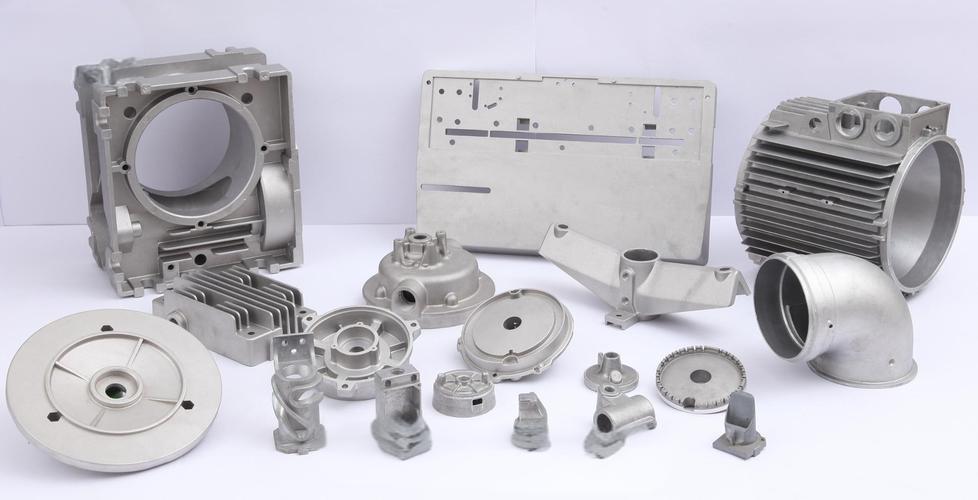
Die casting materials include aluminum, copper, zinc, magnesium, and lead. They are chosen for their high thermal conductivity, corrosion resistance, low melting points, and good mechanical properties. These materials are commonly used in the manufacturing of automotive parts, electronics, and household appliances.
What are the materials option for die casting process?

The metals used for die casting mainly include zinc, copper, aluminum, magnesium, lead, tin, and lead tin alloys. Although die cast iron is rare, it is also feasible. Special die-casting metals include ZAMAK, aluminum zinc alloy, and American Aluminum Industry Association standards: AA380, AA384, AA386, AA390, and AZ91D magnesium.
The characteristics of various metals during die casting are as follows:
Zinc: The easiest metal to die cast, it is economical to manufacture small components, easy to coat, has high compressive strength and plasticity, and has a long casting life.
Aluminum: Lightweight, highly stable in size when manufacturing complex and thin-walled castings, strong in corrosion resistance, good in mechanical properties, high in thermal conductivity and conductivity, and still maintains high strength at high temperatures.
Magnesium: Easy to machine, with a high strength to weight ratio, it is the lightest commonly used die cast metal.
Copper: It has high hardness and strong corrosion resistance. Among commonly used die cast metals, it has the best mechanical properties, wear resistance, and strength similar to steel.
Lead and tin: with high density and extremely high dimensional accuracy, they can be used as special anti-corrosion components. For public health reasons, this alloy cannot be used as food processing and storage equipment. The alloy of lead tin antimony (sometimes also containing a little copper) can be used to make handmade lead letters and hot stamping in letterpress printing.
The maximum weight limits for die casting using aluminum, copper, magnesium, and zinc are 70 pounds (32 kg), 10 pounds (4.5 kg), 44 pounds (20 kg), and 75 pounds (34 kg), respectively.
Zinc: The easiest metal to die cast, it is economical to manufacture small components, easy to coat, has high compressive strength and plasticity, and has a long casting life.
Aluminum: Lightweight, highly stable in size when manufacturing complex and thin-walled castings, strong in corrosion resistance, good in mechanical properties, high in thermal conductivity and conductivity, and still maintains high strength at high temperatures.
Magnesium: Easy to machine, with a high strength to weight ratio, it is the lightest commonly used die cast metal.
Copper: It has high hardness and strong corrosion resistance. Among commonly used die cast metals, it has the best mechanical properties, wear resistance, and strength similar to steel.
Lead and tin: with high density and extremely high dimensional accuracy, they can be used as special anti-corrosion components. For public health reasons, this alloy cannot be used as food processing and storage equipment. The alloy of lead tin antimony (sometimes also containing a little copper) can be used to make handmade lead letters and hot stamping in letterpress printing.
The maximum weight limits for die casting using aluminum, copper, magnesium, and zinc are 70 pounds (32 kg), 10 pounds (4.5 kg), 44 pounds (20 kg), and 75 pounds (34 kg), respectively.
What is Die Casting Machine? What is the difference between Hot chamber and Cold chamber?
What Industries Magnesium Casting Applied on?
Related Article

CNC lathe, full name Computer Numerical Control (CNC), is a highly automated machine tool equipment, mainly used for metal cutting.
what is a cnc machine

Custom CNC (Computer Numerical Control) machining is a manufacturing process that utilizes computer-controlled tools to precisely shape and form intricate parts and components for a wide variety of industries.
Finding the Best Custom CNC Machining Near Me: Tips and Tricks for High-Quality Parts

Aluminum pressure die casting is a manufacturing process that is commonly used in the production of complex metal parts used in a variety of industries, including aerospace, automotive, and electronics. The process involves injecting molten aluminum alloy into a high-pressure steel die in order to create parts with excellent surface finish and dimensional accuracy.
Exploring the Benefits and Advantages of Aluminum Pressure Die Casting for Industrial Applications

Die cast caterpillar models are highly detailed miniature replicas of the real-life heavy machinery used in construction, mining and agriculture. They are made using precision metal molds that create a highly detailed and realistic version of the equipment. Due to their detailed design and high quality construction, these models are highly valued by collectors and enthusiasts alike.
Exquisite Die Cast Caterpillar - Imported Model