
Integrated die-casting is the future industry development trend
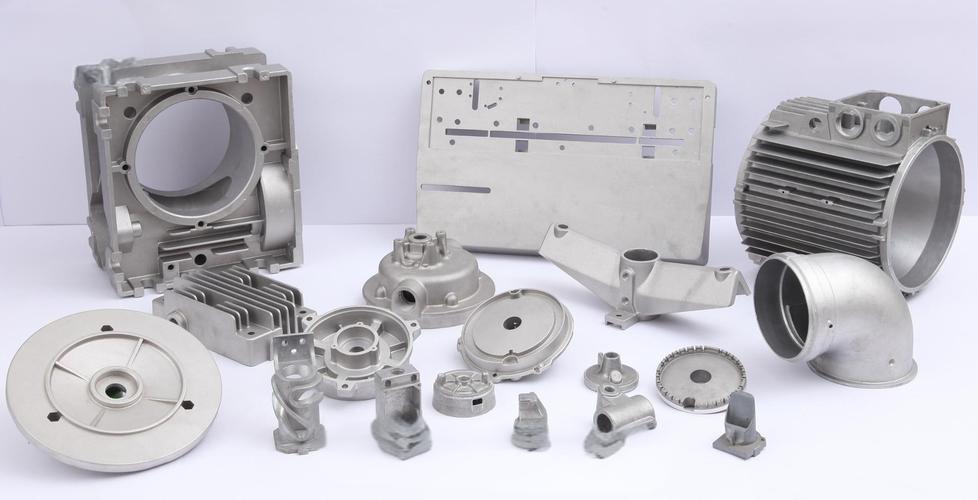
Our company is a trusted aluminum die casting manufacturer with years of experience in producing precision parts for various industries. We use state-of-the-art equipment and employ skilled technicians to ensure that our products meet the highest standard of quality and performance.
Integrated die-casting is the future industry development trend
In the production process, aluminum alloy die casting should consider a series of difficulties such as material selection, material optimization, die development and finishing, and also need to be directly communicated with customers to participate in the product design. All these difficulties require die casting production enterprises to have strong technical strength and talent reserve. In addition, aluminum alloy smelting, die casting, after the process of safety and protection measures, the enterprise's safety production technology and personnel professional put forward higher requirements. Finally, the mutual involvement of vehicle manufacturers and parts manufacturers at all levels in research and development has become a trend with the increasingly obvious specialization of labor in the global automotive industry chain. This upstream and downstream synchronous research and development mode has put forward high requirements for the independent research and development, rapid response and continuous innovation ability of parts suppliers. Therefore, new entrants in the industry are limited by experience accumulation, process understanding and lack of initial research and development strength, so it is difficult to have s strong competitiveness in a short period of time.
1, the industry development overview
- The alloy of different energy and moderate cost is one of the lightweight materials for automobiles Aluminum alloy die casting has a wide application range, and has been widely used in automobile, machinery, electronic appliances and communication equipment, among which the amount of die casting in the automobile industry is the largest. Because of the low production cost of aluminum alloy, mature process and wide application range, so aluminum alloy is the most important metal in the current die-casting parts. Automobile lightweight refers to the car in maintaining the original driving safety, crashworthiness, earthquake resistance and comfort without reducing the performance, and the cost of the car itself is not improved, aiming to reduce the weight of the car itself. Automotive lightweight is the advantage integration of design, materials and advanced processing and forming technology. It is a system engineering combining automobile performance improvement, weight reduction, structure optimization and reasonable price. In the context of promoting "energy conservation and emission reduction" and the gradual rise of new energy vehicles, automobile lightweight, as an important way to reduce the fuel consumption of traditional fuel vehicles and improve the performance of new energy vehicles, has become the trend of The Times At present, the lightweight materials of automotive parts include high strength steel, carbon fiber, aluminum alloy, magnesium alloy and other categories of alloy materials suitable for die casting process, aluminum alloy has the characteristics of low density, strong corrosion resistance, good forming and cutting performance, excellent mechanical properties at high temperature and low temperature, die casting process mature and so on. At present, the most mainstream lightweight materials in the market are aluminum alloy material and high strength steel. Aluminum alloy has good weight reduction performance and cost benefit, so it has realized large-scale commercial application. From the perspective of performance, the density of aluminum is about a third of the steel car use 1 kg aluminum can replace 2.25 kg of steel, and aluminum alloy structure design optimization can achieve secondary weight loss, overall weight loss effect is greater than 50%, in addition to aluminum alloy has high strength, recyclable, corrosion resistance, low density advantages: from the perspective of cost, aluminum alloy price only 2.5 times of steel, far lower than carbon fiber composites. The price of magnesium alloy is similar to that of aluminum alloy, but the corrosion problem of magnesium alloy limits its large-scale application in the automotive industry. Therefore, aluminum alloy is one of the best lightweight materials at this stage.
- Energy conservation and emission reduction policies to promote lightweight development With people's increasing attention to the energy conservation and emission reduction of automobiles, Countries have increasingly stringent regulations on fuel consumption and emissions of fuel vehicles, In April 2017, the Ministry of Industry and Information Technology, the National Development and Reform Commission and the Medium and Long-term Development Plan of the Ministry of Science and Technology, which clearly stated that " by 2020, The average fuel consumption of new cars passenger vehicles to 5.0 liters 100 km, fuel consumption of energy-saving vehicles to 4.5 liters 100 km, commercial vehicles close to the international advanced level, Implementing the national six emission standards, The energy consumption of new energy vehicles is at the international advanced level; By 2025, The average fuel consumption of new vehicles passenger vehicles to 4.0 liters 100 kilometers, commercial vehicles to the international leading level emissions to the international advanced level, The energy consumption of new energy vehicles is in the international leading level." With the increase of consumers' demand for car driving, the economy, safety and comfort brought by lightweight will be more responsive to consumer demand, and the advantages of lightweight driving will be more obvious.
- Increasing lightweight demand for new energy vehicles In recent years, the new energy vehicle industry is booming, and the production and sales of the domestic electric vehicle market are increasing year by year. On November 2,2020, The General Office of the State Council issued the Development Plan of New Energy Vehicle Industry (2021-2035), proposing that by 2025, the sales of new energy vehicles will account for about 20% of new car sales by 2025; by 2035, pure electric vehicles will become the mainstream of new sales vehicles, the core technology of new energy vehicles in China will reach the international advanced level, and the quality brand has strong international competitiveness. Other major automobile industry countries in the world are also increasing investment in the research and development and production of new energy vehicles. New energy vehicles are equipped with three-power systems and a large number of intelligent equipment, which increase more weight than traditional energy vehicles. Meanwhile, based on the current energy supply and energy storage technology of electric vehicles, the short range and the range anxiety caused by charging inconvenience are still important problems facing the new energy vehicle industry. In this context, through the application of lightweight technology, reducing the weight of vehicles and increasing the range has a more important significance for new energy vehicles. According to the China Automobile Industry (2016-2030), for fuel vehicles, engine, transmission system, wheel and braking system are the main application fields of aluminum alloy; for new energy vehicles, battery system and wheel are the main application fields of aluminum alloy, while body structure, body cover and chassis are still rare. According to relevant data, the penetration rate of aluminum alloy body structural parts in traditional fuel vehicles is 4%, and the penetration rate of new energy vehicles is 8%. The market penetration rate is still low, which is the blue ocean market for aluminum alloy application. To sum up, aluminum alloy, as a lightweight material with excellent performance and moderate cost, is in line with the industry trend of automotive lightweight and energy saving and emission reduction. In the future, aluminum manufacturing of automotive winter parts will accelerate the penetration, and the market scale will continue to expand.
2, aluminum alloy precision die casting industry competition pattern Aluminum alloy precision die casting as a kind of conventional auto parts, from a global perspective, from Europe and the traditional auto industry power large parts manufacturer occupies the first mover advantage, represented by Bosch, mainland global auto parts suppliers have system standards, technical personnel, global supply chain competition basis, has been established in the auto market, joint venture, a full range of industry layout. At home, thanks to the government policy support, capital market power and the rapid development of high and new technology, part of the local advantage enterprise research and development manufacturing capacity, has become the domestic top, world-class auto parts suppliers, get global vehicle manufacturing enterprises and multinational parts suppliers widely recognized.
- Automobile lightweight and energy saving and emission reduction are the only way for the development of the automobile industry Automobile lightweight refers to the weight reduction realized by the integrated application of structural lightweight design technology with a variety of lightweight materials and lightweight manufacturing technology to improve the power performance of the automobile, reduce fuel consumption and reduce exhaust pollution under the conditions of meeting automobile use requirements, safety and cost control. Especially after the "carbon peak" and "carbon neutrality" were put forward, the demand for energy conservation and emission reduction of vehicles is more urgent. Reducing the quality of the vehicle can also help to improve the handling performance of the car and improve the safety of the car, which can achieve better control purpose under a lower traction load, and the braking distance is reduced accordingly, so that the vehicle can get better dynamic response. Due to the needs of energy saving, environmental protection and performance, automotive lightweight has become one of the important directions of the development of the global automobile industry, is the common choice for domestic and foreign automobile manufacturers to deal with the challenges of energy and environment, but also the only way for the sustainable development of the automobile industry. (1) Automotive lightness is the inevitable trend of industry development The era of low-carbon economy is gradually approaching, and countries or regions around the world have formulated more stringent standards for vehicle emissions and fuel economy. The European vehicle emission standards, which came into effect in 2021, stipulate that the average emissions of new vehicles in the EU region should not exceed 95 grams / kilometer by 2021. The Supplementary Letter of Intent, issued in the US 2017 to 2025 by the EPA and the Department of Transportation for Greenhouse Gas Emissions and Fuel Economy Standards from 2017 to 2025 on July 29,2011, stipulates that the average greenhouse gas emissions of new light vehicles should decrease from 250 g / mile in 2016 to 163 g / mile in 2025. China's "light vehicle pollutant emission limits and measurement methods (China's sixth stage)" namely "national six" standard was officially released on December 23,2016, plans to implement in 2020 and 2023 step by step "national six" standard than "national five" standard overall stricter more than 50%. From the international perspective, the problem of energy saving and emission reduction of automobile is mainly through the following three ways: one is to vigorously develop new energy vehicles, through the use of new fuels and electric vehicles to reduce the dependence on oil resources; the second is to vigorously develop advanced engine technology, through the application of a series of electronic technologies, improve the fuel economy; the third is to vigorously develop the light weight technology of automobile, through reducing the energy saving and emission reduction under the premise of ensuring the safety of automobile and other basic performance. Considering the potential and constraints of the above three technical ways to vigorously develop and promote the automotive lightweight technology will be a practical and feasible way of energy conservation and emission reduction.
- The development of new energy vehicles puts forward a more urgent demand for automobile lightweight New energy vehicles refer to the use of new power system, completely or mainly driven by new energy vehicles, mainly including pure electric vehicles, plug-in hybrid electric vehicles and fuel cell vehicles. In October 2020, the Executive meeting of The State Council adopted the "New Energy Vehicle Industry Development Plan (2021-2035)", aiming to account for 20% of the total annual sales of new energy vehicles in 2025. New energy vehicles related encouraging policies will make progress and promote the application of aluminum alloy and other new materials in automotive lightweight. At present, one major problem facing new energy vehicles is that the bulky battery increases the weight and volume of the car, which restricts the range and handling performance. Therefore, if there is no major breakthrough in battery technology in the short term, new energy vehicles urgently need lightweight to reduce the overall quality of the vehicle, so as to reduce the pressure of battery weight gain. This will greatly promote the development of lightweight material application technology, and provide a broader space for the development of die-casting enterprises based on light alloys such as aluminum alloys. Aluminum alloy material has light weight, complex manufacturing and thin-wall casting with high dimensional stability, strong corrosion resistance, good mechanical properties, high thermal conductivity and electrical conductivity, high temperature strength is still very high characteristics, to achieve the ideal choice of automobile lightweight.
4, integrated die-casting is the future industry development trend Pure electric vehicles are different from the traditional fuel vehicles, and the battery + motor replaces the engine to become the power output system of the car. The electric drive system design has experienced the development stage of independent, two in one, three in one and multi in one. Electric drive system integration more functions is the trend of The Times, the design of electric drive shell will also be from independent to integrated design: from split simple integration, namely reducer, motor and electric control have their own independent shell design, to motor, reducer shell integration and three major shell integration. As more functions are integrated into the electric drive, the shell will also have more functional designs superimposed. Motor, electric control and reducer all need the cooling system, and the design of the shell needs to consider the design and layout of the cooling pipeline. This puts forward high requirements for the product development and design capabilities of the shell suppliers. Integrated die-casting is a general trend of automobile structure simplification. Integrated die-casting body is the upgrade of lightweight technology, reducing the number of body parts, greatly simplifying the body structure; In the lightweight, simplify the supply chain link, with the advantages of reducing vehicle weight and battery cost, high utilization of raw materials, and reducing the factory assembly efficiency. With the development of high vacuum die casting process and large tonnage die casting machine, the structural parts of aluminum alloy die casting can meet the requirements of performance, making this kind of products can be popularized in new energy vehicles. More industry information, please refer to PWC policy consulting the 2024-2030 automobile aluminum alloy precision die casting industry market research and development trend forecast report, at the same time PWC policy consulting also provides industry research report, industry chain consulting, project feasibility report, specialization, new little giant certification, national manufacturing individual champion enterprise certification, difference planning, project evaluation report, BP business plan, industry map, industry planning, blue white paper, IPO offering feasibility study, IPO working paper consulting services.
What are the common casting methods are ?
What design is a good design die casting part?
Related Article


